
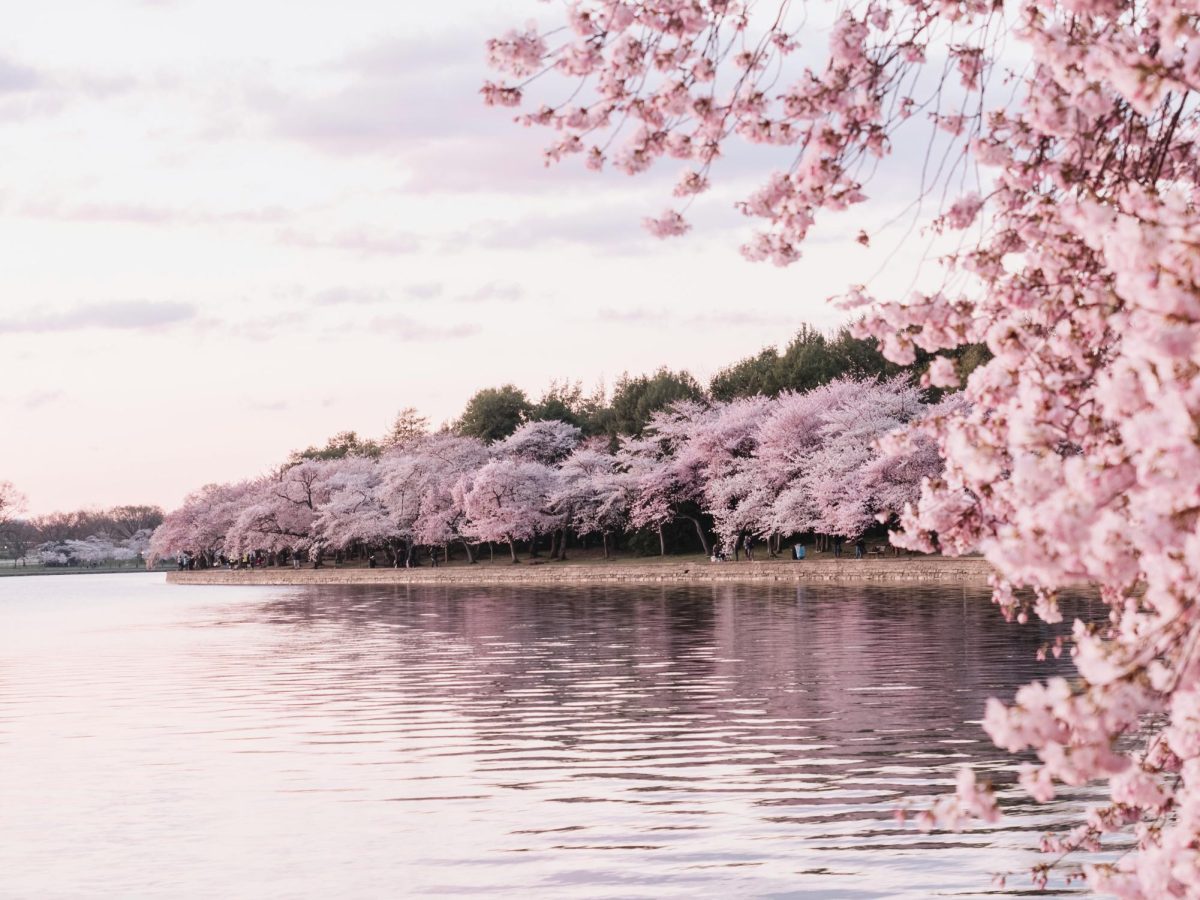
“In the cherry blossom’s shade there’s no such thing as a stranger.” – Kobayashi Issa
Every spring, a delicate canopy of pale pink transforms the landscape, signalling a tradition that has endured for more than a millennium. Communities worldwide continue to come together to gather under the blossoming branches. Cherry blossoms are more than a seasonal marker; they are a lesson in mindfulness. Because the beautiful phenomenon of their petals only lasts a few days, we learn to pause and appreciate the present moment before the petals scatter.
This spirit of appreciation is rooted in a century-old gesture of peace. What began as a singular gift of 3,000 trees sent from Tokyo to Washington, D.C. in 1912 has become a diplomatic bridge that has blossomed into a worldwide celebration of renewal.’
In old Japanese folk religions, cherry blossoms signified agricultural abundance.
Originally, practitioners of these religions believed the trees were dwelling places for mountain deities who transformed into gods of the rice paddies. Thus, people traveled to the mountains to worship the trees every spring when they bloomed. And, in ancient times, farmers believed the trees would bring an abundant harvest and would pray, make offerings to, and cook under the canopy.
Later, cherry blossoms came to represent the colorful life of the samurai who lived in a strict moral code of honor and discipline. Their duty was to preserve virtues and be fearless warriors even in the face of death. Fallen cherry blossoms or petals symbolized the life of a samurai – a brief explosion of bright color for a short life before they wither and die. And during World War II, kamikaze pilots marked their planes with a sakura before embarking on a suicide mission.
“In Japan, the blossoms are said to embody the samurai spirit, evoking the image of warriors who believed their time on Earth was brief and should be glorious.” — CBS Sunday Morning
Dating back more than 1,200 years, the ritual of Hanami–hana – “flower” mi – “to look”–, or “flower viewing,” in Japan, is a ceremony where people gaze upon the trees to celebrate the beauty of them. For many Japanese, the Hanami season in March and April is the best time of year. During this season, cherry blossom trees from all over the country come to bloom between 7 and ten days and people hold outdoor parties to view them.
This year, according to the National Park service, the Cherry trees along the Tidal Basin reached peak bloom on March 26.
The National Cherry Blossom Festival is a four-week citywide celebration in Washington, D.C., that celebrates the blooming of the beautiful 3,000 cherry trees. This festival takes place each year to commemorate the gift of the Cherry blossoms from Japan to the United States.
The cherry blossoms represent a lasting bond of friendship between the people of the United States and Japan.
The National Cherry Blossom Festival in Washington, D.C. features signature events like Blossom Kite Festival, National Cherry Blossom Festival Parade, National Museum of Asian Art’s Cherry Blossom Celebration, The Cherry Blossom 10 Mile & 5K, and Cherry Picks.
The Cherry Blossom Festival remains a meaningful tradition, it’s not only a spring event – but a lasting testament to the international friendship and culture exchange. It serves as a reminder of the enduring bond between the United States and Japan.

Sources:
- Picture 1: https://travel.rakuten.com/contents/usa/en-us/guide/yoshino-guide information in picture: https://www.jal.co.jp/in/en/guide-to-japan/experiences/cherry-blossom/what-do-cherry-blossoms-represent/index.html
- Picture 3: https://www.popville.com/2024/03/saturday-blossom-kite-festival-national-cherry-blossom-festival/ information in picture: https://nationalcherryblossomfestival.org/event/blossom-kite-festival/#:~:text=Presented%20by%20Amazon,Library%20and%20LEGO%20Discovery%20Center.
- Picture 4: https://wamu.org/story/22/04/08/sakura-matsuri-dc-cherry-blossoms/
- Picture 5: https://nationalcherryblossomfestival.org/event/national-museum-of-asian-arts-cherry-blossom-celebration/