
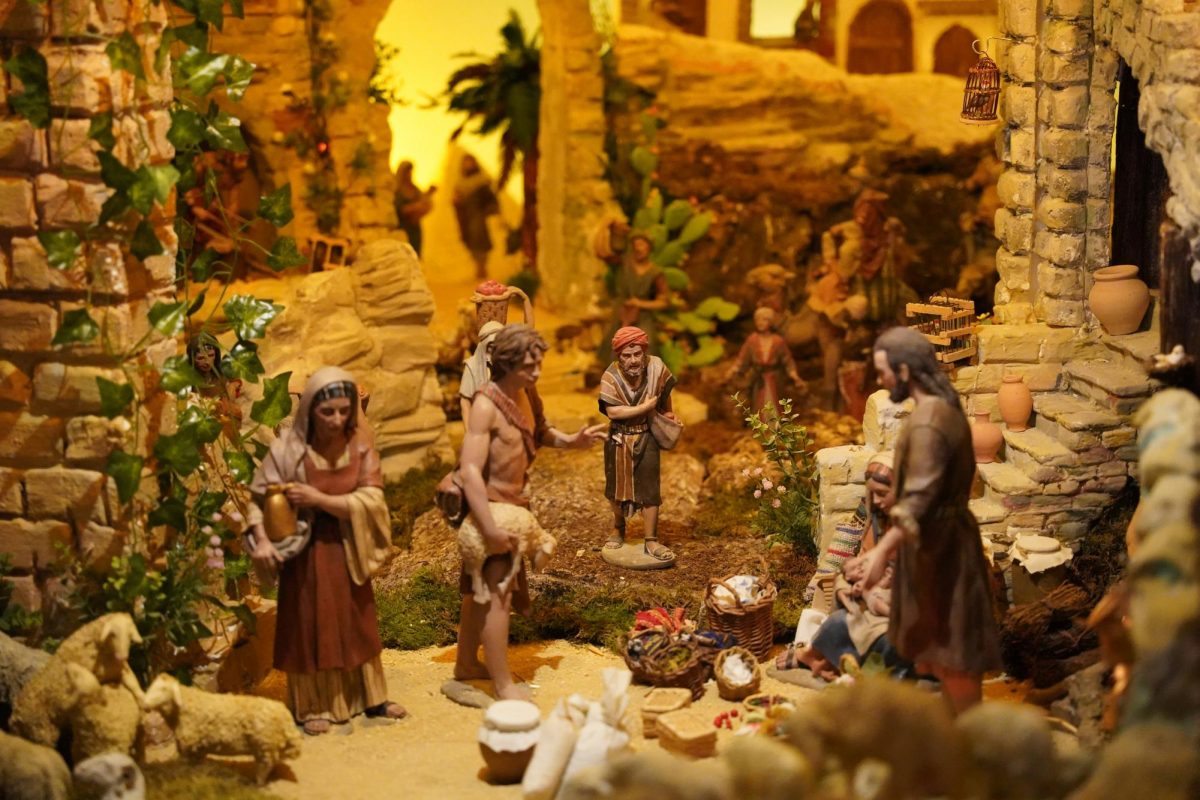
The New Testament never mentions the date of Jesus’s birth. Back in those times, birthdays weren’t celebrated, so there was no original “Christmas date” to preserve. However, by the 3rd and 4th centuries, Christians began to assign symbolic dates to major events. Naturally, the Church wanted a date for the birth of the Savior. It was decided for Christmas to be placed on December 25th because of many symbolic and cultural reasons.
December 25th is near the winter solstice, which is often said to represent the “rebirth of the sun.” Christian theologians, like Augustine, used this symbolism to represent the birth of Christ as the “Light of the World.” As the winter solstice is when sunlight begins increasing, Christian thinkers believed it to naturally align with the idea of Christ as a divine light entering a dark world. This is supported by many biblical passages where Jesus, “the Light of the world,” (John 8:12) is compared to the sun. Some other writings, particularly one by Hippolytus of Rome in the 3rd century, determined that Jesus was conceived on March 25th, therefore his birth would be nine months later on December 25th. However, it is also noted that many pagan holidays and festivals took place around the same time.
The decision to place Christmas on this date can also be attributed to the many popular pagan festivals that also occurred at this time. The Roman Empire had many winter festivals. The early Church decided to “Christianize” the existing holidays, rather than doing away with them. Saturnalia, a weeklong Roman festival featuring feasts, gift-giving, and decorating, occurred from December 17th to December 23rd. Sol Invictus, “Birthday of the Unconquered Sun”, was established on December 25th as the birthday of the sun god, which Christian’s reframed as the birthday of Jesus, the “true sun.” Lastly, the Scandinavian and Germanic tradition of Yule also fell around this time, with traditions often including evergreen trees, feasting, and burning logs. Therefore, Christmas was placed in winter for practical cultural reasons, rather than because the Church believed it to be Jesus’s birthdate.
Modern-day Christmas includes many traditions, many which have no religious importance or relation to Jesus. Just like the decision that led the Church to place Christmas on the 25th, the traditions of today were shaped by the traditions of yesterday. Romans often decorated homes with holly, ivy, and wreaths during their winter festivities, translating directly into the greenery that celebrators put up in the modern century. The concept of gift-giving from Saturnalia tradition merged with the idea of the Magi bringing gifts to Jesus. Later, Saint Nicholas, who delivered money in the middle of the night to three sisters for them to escape a life of misery, later evolved into the idea of Santa Claus.
According to Mrs. Tydings, an IB World Religions teacher, the traditional evergreen Christmas tree has Germanic roots, as evergreens symbolize life in winter, and were often decorated with candles, fruit, and ornaments.
From the celebration of Yule, Santa mixed with the Norse god Odin, as during Yule, Odin rode a flying horse in the sky, bringing gifts and judging who was good or bad.
Taken together, the origins of Christmas reveal a holiday that is a culmination of cultural symbolism and festivities. Early Christian’s chose a date near the winter solstice not because they believed Jesus was truly born then, but because the season’s theme of returning light to the world offered a powerful theological meaning, while also aligning with other cultural events. Over the centuries, traditions from Roman festivals, Germanic winter rides, and Yuletide blended into the international holiday recognizable to all as Christmas. This holiday reflects the long, intertwined history of faith, culture, and the desire to spread light and joy during the darkest days of the year.
Sources: